

 English
  Español
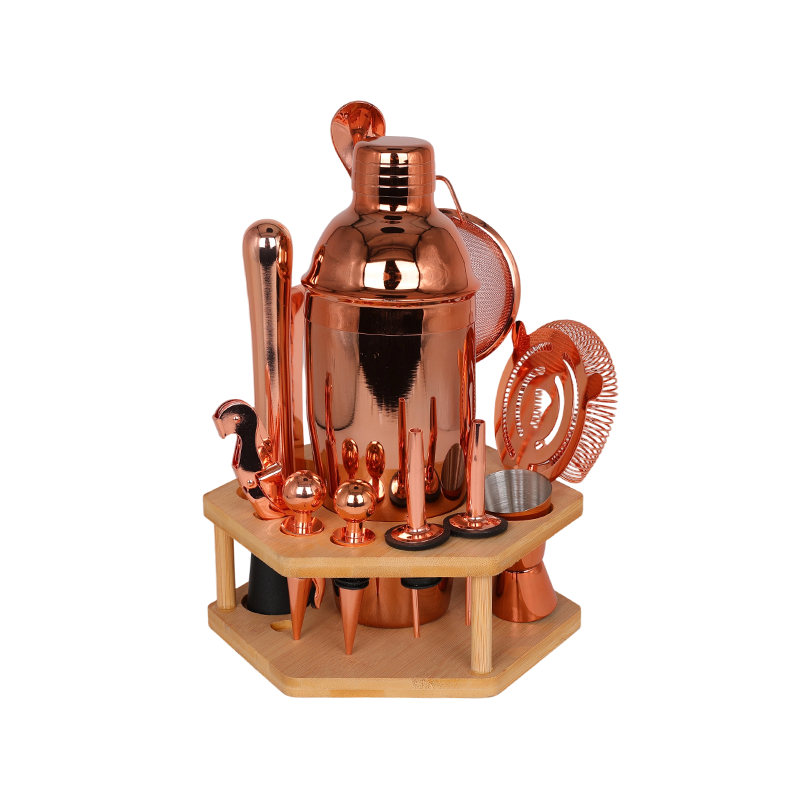
Limited counter space has become a common issue across restaurants, cafés, hotel lounges, mobile beverage stations, and home bars. A stainless steel bartender kit used together with a Boston shaker bar set is increasingly selected because it helps organize bar tools within smaller work areas while supporting daily drink preparation routines. Compact storage design is now part of purchasing decisions, especially for beverage operations where staff need quick access to tools without overcrowding the workstation.
Modern beverage service often involves more than cocktail preparation alone. Many operators now manage coffee-based drinks, fruit beverages, mocktails, sparkling mixers, and seasonal menu items from the same counter area. As menus expand, storage efficiency becomes closely connected to workflow, cleaning access, and preparation speed. Instead of adding separate accessories one by one, many users prefer integrated bartender kits that keep essential tools grouped together.
Why Bar Storage Has Become More Important
Beverage counters are handling higher equipment density than before. A typical preparation station may include ice containers, syrup bottles, garnish trays, mixing tools, glassware, and payment equipment within a relatively small area. Without organized storage systems, bartenders often spend additional time searching for accessories or repositioning tools during service.
In smaller restaurants and cafés, storage challenges become more noticeable because preparation zones are shared between multiple tasks. Staff may prepare cocktails, cold coffee drinks, and fruit-based beverages from the same workstation. If bar tools are scattered across shelves or drawers, repeated movement interrupts workflow and increases counter congestion during busy periods.
Another issue involves cleaning and closing procedures. Loose accessories stored separately require more handling at the end of service hours. Organized bartender kits help simplify cleanup because tools can be grouped together instead of collected individually from different areas of the workstation.
Visual presentation also influences storage planning. Open beverage counters expose preparation areas directly to customers, making the organization part of the overall dining atmosphere. Compact stainless steel tool arrangements often create a cleaner and more structured appearance compared with mixed storage setups.
Design Changes That Support Compact Organization
Modern bartender kits are increasingly designed around storage efficiency rather than only mixing performance. Manufacturers are adjusting tool shapes, stacking structures, and accessory layouts to reduce the amount of counter and cabinet space required during daily use.
The Boston shaker system contributes to this trend because of its simple two-piece construction. The shaker tins can usually stack together vertically when not in use, reducing shelf space compared with multi-component shaker systems.
Several design details commonly support compact storage systems:
|
Product Feature |
Storage Function |
Practical Benefit |
|
Stackable shaker tins |
Reduce shelf height usage |
Simplifies cabinet organization |
|
Integrated tool stand |
Keeps accessories grouped together |
Reduces scattered counter items |
|
Slim-profile jiggers |
Fit smaller drawers |
Improves storage flexibility |
|
Hanging loops on tools |
Allow wall storage |
Frees up preparation space |
|
Stainless steel construction |
Handles repeated movement and washing |
Supports long-term daily handling |
|
Compact accessory arrangement |
Limits unnecessary duplication |
Helps organize beverage stations |
Some bartender kits are now packaged with fitted holders or storage racks that allow bartenders to keep strainers, spoons, muddlers, and pourers in one location. This arrangement shortens the distance between preparation steps while helping staff return tools to the same position after use.
Restaurants with mobile beverage carts also benefit from compact organization. Portable service stations usually have limited drawer space, so stackable and multifunctional tools are often preferred over larger individual accessories.
Where Compact Bartender Kits Are Commonly Used
The demand for organized bar storage systems extends across several types of beverage environments. Compact bartender kits are no longer limited to traditional cocktail bars and are now used in smaller hospitality spaces where preparation efficiency matters.
Common application environments include:
- Small restaurant beverage counters
- Rooftop café drink stations
- Hotel room service bars
- Mobile catering services
- Outdoor event beverage setups
- Home cocktail stations
- Coffee shops offering mixed drinks
- Shared kitchen beverage areas
In cafés that prepare both coffee and mixed cold drinks, storage flexibility becomes especially important. Espresso machines, grinders, cups, syrups, and cocktail tools often occupy the same preparation counter. Compact bartender kits help reduce overlap between beverage categories.
Event catering businesses also rely on organized storage because equipment must be transported, unpacked, and reassembled repeatedly. Stackable shaker tins and grouped accessories simplify setup procedures while reducing the number of separate containers needed during transport.
Home users are another growing segment. Apartment kitchens and home bars often have limited cabinet space, making organized bartender kits more practical than storing separate tools individually across drawers and shelves.
Workflow Improvements Seen in Real Beverage Operations
Several beverage operators have adjusted their workstation layouts after identifying storage-related interruptions during service hours.
A small hotel lounge operating with limited back-counter shelving recently reorganized its beverage tools by switching to standardized stainless steel bartender kits with integrated holders. According to staff feedback, preparation counters became easier to maintain during evening service because strainers, jiggers, and spoons remained in designated positions throughout the shift. Bartenders also reported spending less time searching through drawers between drink orders.
In another example, a mobile catering team handling outdoor corporate events replaced mixed plastic storage bins with stackable Boston shaker bar set arrangements stored in compact transport cases. Staff observed that loading and unloading procedures became more organized because fewer loose accessories needed separate packing. During event setup, bartenders were able to arrange preparation stations more quickly using grouped storage systems.
Although storage efficiency depends on overall workstation design, these examples show how tool organization contributes to smoother beverage preparation routines.
