

 English
  Español
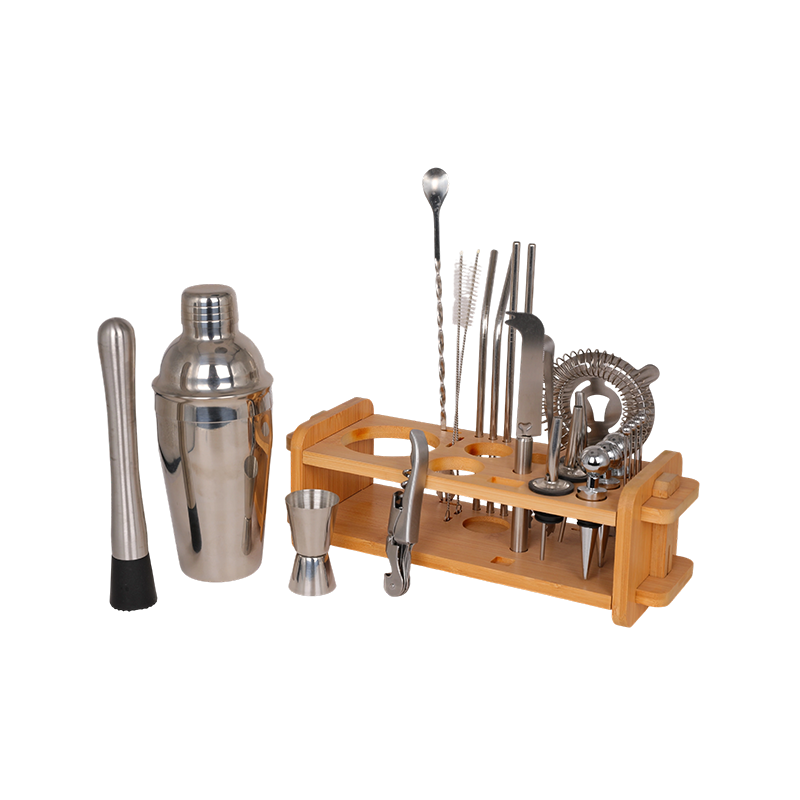
Large gatherings, wedding receptions, hotel banquets, outdoor catering services, and corporate parties often require beverage stations to operate continuously for several hours. A stainless steel bartender kit used together with a Boston shaker bar set is becoming a practical choice for event beverage service because it helps organize tools, simplify drink preparation steps, and support faster workstation transitions during busy serving periods. Event bartenders are placing more attention on workflow efficiency, especially when beverage menus include cocktails, mocktails, sparkling drinks, and customized orders prepared within limited service timeframes.
Unlike fixed restaurant bars, event beverage stations are temporary setups that must balance portability, cleaning convenience, and preparation speed. Equipment that reduces unnecessary movement and keeps essential tools accessible can help bartenders maintain smoother service during peak guest activity.
Event Beverage Service Often Faces Workflow Interruptions
Cocktail preparation at events involves different challenges compared with permanent restaurant bars. Temporary beverage stations are frequently built in conference halls, wedding venues, outdoor tents, rooftop spaces, or exhibition centers where storage and preparation areas may be limited.
One common issue is tool organization. During busy serving periods, bartenders often switch rapidly between shaking, measuring, garnishing, and pouring. If tools are scattered across counters or packed separately in transport containers, preparation time can increase because staff spend extra seconds locating accessories between drink orders.
Another challenge comes from mobility. Event equipment is repeatedly packed, transported, assembled, cleaned, and moved between locations. Fragile or bulky accessories may complicate transportation, especially for mobile catering teams handling multiple events in a single week.
Cleaning access is also more restricted at temporary venues. Some outdoor events or banquet halls provide only limited washing facilities, making it important for beverage tools to rinse quickly and resist ingredient buildup during continuous use.
Temperature conditions create additional operational pressure. Ice exposure, citrus juices, syrups, and condensation affect bartender tools throughout the service period. Materials that handle moisture and repeated handling without complicated maintenance procedures are often preferred in these environments.
Equipment Design That Supports Faster Event Workflow
Modern bartender kits are increasingly designed around practical event service needs rather than decorative presentation alone. Compact layouts, stackable accessories, and simplified tool structures are helping beverage teams organize stations more efficiently during setup and operation.
The Boston shaker format is widely used because of its two-piece structure. Unlike threaded cocktail shakers, Boston shaker tins can usually be separated quickly after shaking, helping bartenders move directly from mixing to pouring without extra handling steps.
Several bartender kit features contribute to smoother workflow during events:
|
Product Component |
Practical Function |
Event Service Benefit |
|
Stainless steel shaker tins |
Support repeated cold mixing |
Suitable for high-volume drink preparation |
|
Double-sided jigger |
Measures different liquid portions |
Reduces tool switching |
|
Hawthorne strainer |
Controls ice and fruit pulp flow |
Supports continuous pouring |
|
Bar spoon |
Handles stirred beverage recipes |
Useful for mixed drink menus |
|
Compact storage stand |
Organizes accessories |
Reduces counter clutter |
|
Stackable tool design |
Simplifies transport and storage |
Helps mobile event setup |
Many event bartenders also prefer all-metal shaker sets because they are lighter to transport than glass-based alternatives and are less likely to break during repeated loading and unloading procedures.
Another practical adjustment involves accessory compatibility. Some bartender kits are arranged so that strainers, muddlers, pourers, and spoons fit within a single carrying case or organized holder. This setup helps reduce preparation delays caused by misplaced tools during crowded event operations.
Event Types Where Bartender Kits Are Frequently Used
Cocktail workflow efficiency becomes especially important at events where beverage demand rises quickly within short periods. Organized bartender kits are commonly used in both formal hospitality settings and casual outdoor gatherings.
Typical application environments include:
- Wedding receptions
- Hotel banquet services
- Corporate networking events
- Outdoor catering stations
- Rooftop parties
- Festival beverage booths
- Exhibition and trade show lounges
- Private celebration bars
Wedding events often involve several beverage categories operating simultaneously, including alcoholic cocktails, sparkling drinks, fruit beverages, and non-alcoholic mocktails. Bartenders need tools that support repeated recipe preparation while remaining easy to clean between service periods.
Corporate events create a different type of workflow challenge because serving speed becomes closely connected to guest movement during networking sessions or conference breaks. Beverage counters may experience short bursts of high order volume followed by quieter periods, requiring flexible workstation organization.
Outdoor events place additional emphasis on portability and durability. Wind exposure, uneven surfaces, and limited storage space can affect preparation routines, making compact stainless steel equipment more practical for temporary beverage setups.
