

 English
  Español
Growing interest in bar equipment has created a steady demand for the Stainless Steel Cocktail Shaker Wholesale market, the expanding customization field of the OEM Mixology Bartender Kit, and the increasing expectations surrounding the role of a dependable Bartending Tools Supplier. As more bars, restaurants, hotels, and home mixology users explore structured tool sets, understanding how these products are manufactured, evaluated, and applied can help buyers make practical and informed decisions. The development of bar tools is no longer limited to aesthetics; performance, ergonomics, and production stability all play important roles in shaping how bartenders work daily.
Understanding How Stainless Steel Shakers Function in Real Bar Settings
The cocktail shaker is one of the core components of any bar workstation. Stainless steel variations are widely chosen because they handle temperature changes effectively during shaking, maintain structural integrity under repeated use, and interact well with acidic ingredients. In wholesale purchasing, however, buyers often examine far more than the surface appearance.
One of the primary considerations is steel grade. Many commercial bars prefer using 304 stainless steel due to its balanced durability and corrosion resistance. Meanwhile, budget-conscious environments sometimes use 201 stainless steel for its affordability and lighter weight. Each material choice responds to different user priorities, and understanding these variations is essential for accurate procurement.
Another key factor is wall thickness. Shakers with excessively thin walls may dent or deform after repeated use, while very thick walls can make them heavier and less comfortable during long shifts. An optimal balance ensures that bartenders feel stable temperature feedback while maintaining control over movement.
Fit and seal quality also influence performance. A well-designed shaker allows bartenders to separate components with a predictable amount of effort. If the seal is too tight, it slows service; if it is too loose, leakage may occur during vigorous shaking. Wholesale buyers often inspect batch consistency to ensure that each piece maintains the same performance level.
What OEM Bartender Kits Offer Beyond Standard Sets
The OEM Mixology Bartender Kit category has grown significantly due to rising demand for brand-specific designs. Bars and distributors increasingly request customized tool combinations, colors, finishes, and packaging that reflect their branding or product positioning.
OEM manufacturing typically includes:
- Tailored tool combinations
- Custom logo engraving or laser marking
- Unique surface finishes such as brushed, matte, or color-coated
- Adjusted weight distribution for specific markets
One advantage of OEM production is flexibility. A supplier can adjust the length of bar spoons, the curvature of strainers, or the calibration of jiggers based on regional habits. For instance, markets with strong shaking culture prefer heavier tins, while markets favoring spirit-forward cocktails focus more on mixing tools.
Buyers evaluating OEM services often examine whether the manufacturer provides technical drawings, material certificates, and sample test runs before mass production. These steps help prevent inconsistencies and guarantee the kit meets the required standards.
How Bartending Tools Suppliers Maintain Production Stability
A capable Bartending Tools Supplier supports the industry by managing raw material sourcing, machining precision, surface finishing, packaging, and logistics. Stability depends on how well the supplier maintains quality control across each step.
Suppliers often operate with dedicated departments for stamping, polishing, welding, and inspection. Skilled polishing is particularly important because it influences both durability and visual appeal. Over-polishing may weaken the tool’s structure, while inconsistent polishing leaves visible lines that affect presentation.
For large-volume orders, consistency becomes a major point of evaluation. A reliable supplier ensures that tools from different batches share similar weight, thickness, shape, and finish. This is especially crucial for bars that train staff using standardized tools, as variations in tool balance can affect learning and workflow.
Many purchasers also pay attention to production capacity. A supplier capable of fulfilling continuous bulk orders reduces the risk of supply chain disruptions. This matters for retailers and distributors who operate seasonal promotions or maintain ongoing inventory cycles.
Another important element is after-sales support. Bars and distributors may require updated versions of certain tools, additional accessories, or modified packaging for new campaigns. Suppliers who adapt quickly often become long-term partners in the bar equipment industry.
Evaluating Different Stainless Steel Finishes in Wholesale Orders
Surface finish affects the usability and aesthetic value of stainless steel cocktail shakers. Glossy finishes offer a reflective style but may show fingerprints more easily. Brushed finishes exhibit a textured appearance that hides minor scratches. Matte finishes generally present a contemporary look but require consistent coating techniques to avoid uneven surfaces.
The choice of finish depends on the intended environment. High-volume commercial bars typically prefer finishes that mask wear and tear, while gift-oriented markets often prioritize bright or decorative styles.
In wholesale purchasing, it is common to request samples from multiple batches. This helps verify that color plating—especially rose gold, black, or rainbow finishes—remains consistent throughout mass production. Buyers also review coating adhesion to ensure that the finish does not fade during routine washing.
Tool Selection in OEM Kits and Their Practical Impact
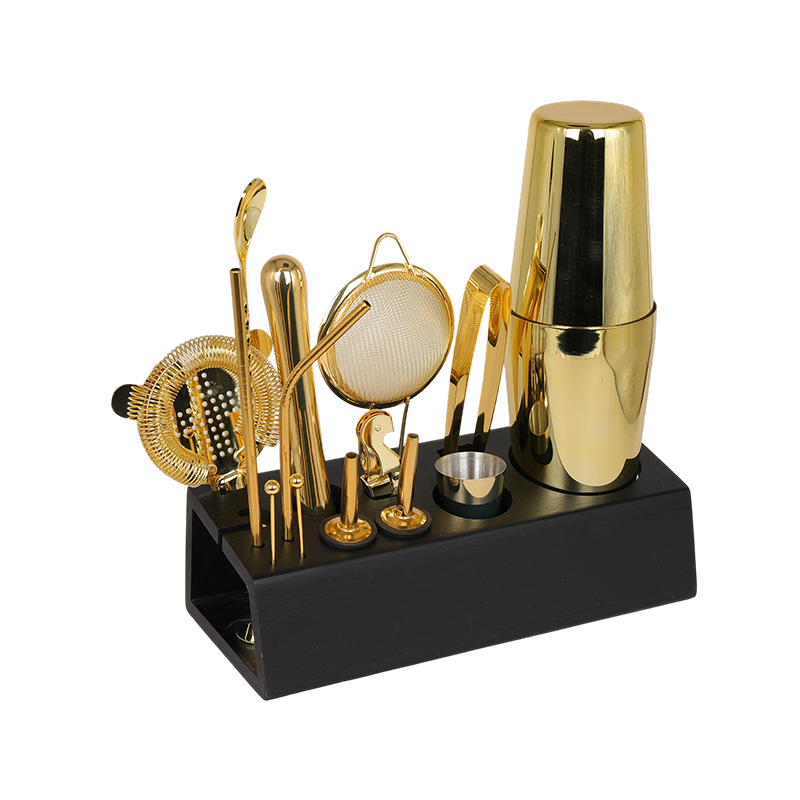
When designing an OEM Mixology Bartender Kit, deciding which tools to include is one of the steps. Core tools usually consist of:
- Cocktail shakers
- Jiggers
- Strainers
- Bar spoons
- Muddlers
- Pourers
Beyond these basics, specialized tools such as atomizers, garnish tongs, and citrus peelers can be added depending on the target audience. Training institutions often request more standardized setups, while retail gift sets focus on visually appealing assortments.
The arrangement and presentation of tools within packaging also influence user experience. Foam inserts protect tools during transport, while molded trays improve display value for retail packaging. Buyers should assess whether the packaging supports both transportation safety and user convenience.
Why Supplier Communication Matters in Bartending Tool Procurement
When dealing with large-scale purchases—whether for wholesale shakers or OEM kits—communication between buyers and suppliers significantly affects the final product. Detailed requirements regarding dimensions, finish, color, and packaging should be shared early in the process.
Suppliers frequently offer design suggestions based on manufacturing experience. For example, certain color coatings may require thicker layers to achieve uniformity, or specific jigger markings may be easier to engrave than stamp. Buyers who consider these suggestions often benefit from improved stability during mass production.
Sampling, feedback, and revision cycles form a natural part of OEM manufacturing. These processes help ensure that tools behave predictably in real bartending environments—maintaining measurement accuracy, comfort, and structural integrity.
Supporting Hospitality Businesses Through Practical Tool Design
Bars depend heavily on tools that perform consistently under repeated use. Poorly constructed tools can cause slower service, inaccurate pours, or discomfort during long shifts. As such, the quality of a Stainless Steel Cocktail Shaker Wholesale order or an OEM Mixology Bartender Kit directly influences daily operations.
Suppliers that pay attention to ergonomic shaping, noise levels during shaking, and the balance of mixing tools contribute to smoother bartender workflows. These design considerations help reduce fatigue and support accurate drink creation.
Home users also benefit from these design improvements. As interest in home mixology grows, more consumers expect professional-level function packaged in beginner-friendly sets.
A Market Evolving Alongside Global Cocktail Culture
With cocktail culture expanding across different regions, the demand for diverse tools continues to increase. Stainless steel shakers support consistent drink creation in bars, OEM kits allow brands to build identity, and bartending tools suppliers form the backbone of industry supply.
As buyers refine their expectations—whether focused on durability, customization, pricing, or performance—the industry keeps adapting through new manufacturing techniques, surface treatments, and design approaches. These developments contribute to better user experiences across all levels of cocktail preparation.
