

 English
  Español
Creating cocktails at home has gradually shifted from a casual hobby to a structured lifestyle choice. As more people design dedicated bar corners in kitchens, dining areas, or living rooms, the demand for durable and well-organized tools has increased. A stainless steel bartender kit combined with a bartender kit with a stand reflects this shift, offering both practical functionality and visual order for modern home bar setups. Rather than purchasing separate accessories over time, users now look for coordinated tool sets that support daily use, social gatherings, and personal experimentation.
Growing Interest in Structured Home Bar Setups
Home entertaining has become more intentional. Instead of improvised drink preparation using kitchen utensils, many households now prefer purpose-built bar tools. This change is influenced by several factors: online cocktail tutorials, increased appreciation for craft beverages, and the desire to recreate bar-style presentation at home.
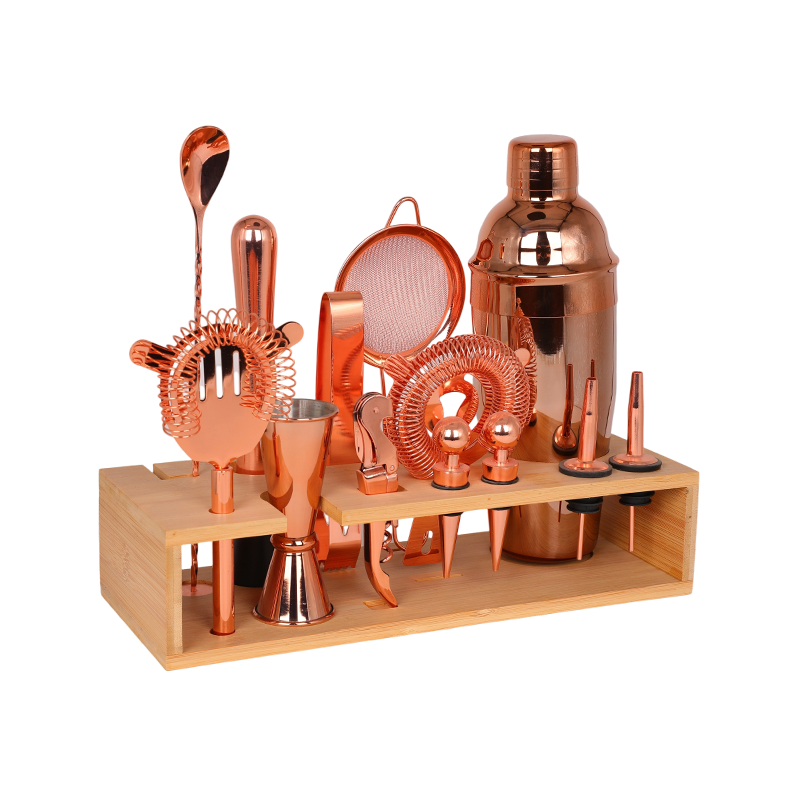
A complete set generally includes a shaker, jigger, strainer, muddler, bar spoon, fine mesh strainer, pour spouts, stirring straw, citrus picker, ice tongs, and wine key. When these tools are manufactured in stainless steel, they offer consistent weight, balanced handling, and resistance to staining. For users building a home bar area, having coordinated tools simplifies preparation and improves organization.
The addition of a stand further supports structured storage. Instead of storing tools in drawers where moisture can accumulate, a dedicated stand allows them to air dry and remain accessible.
Material Considerations: Why Stainless Steel Matters
Material selection plays an important role in long-term usability. Stainless steel is commonly chosen for bartender kits because of its corrosion resistance and mechanical strength. Unlike coated metals or low-grade alloys, stainless steel maintains surface integrity even after repeated exposure to citrus juices, syrups, and alcohol.
For home users, this means:
- Surfaces are less likely to retain odors from strong ingredients such as herbs or bitters.
- Cleaning can be done using mild detergent without affecting structural integrity.
- Tools maintain their appearance after frequent washing.
The weight of stainless steel tools also contributes to stable handling. A shaker with appropriate thickness provides controlled shaking without excessive flexing. Similarly, a stainless steel jigger keeps its shape over time, helping preserve measurement accuracy.
These features support consistent drink preparation, particularly for users learning precise cocktail ratios.
Functional Roles of Core Tools in Daily Use
A well-designed bartender kit supports different cocktail techniques rather than limiting the user to simple mixed drinks.
The shaker is central for combining ingredients that require aeration or chilling. Stainless steel construction helps conduct cold temperatures efficiently, allowing ice to cool the mixture evenly. The seal between shaker components should fit securely without requiring excessive force to open.
The jigger ensures consistent proportions. For beginners, measurement accuracy reduces the risk of overly high or diluted drinks. Clear internal markings improve usability, especially when preparing multiple servings.
Strainers perform a filtering role. The standard Hawthorne-style strainer blocks ice and larger solids, while a fine mesh strainer removes smaller particles such as crushed herbs or citrus pulp. Using both creates smoother textures in drinks like sours or martinis.
The muddler releases flavor from fruits and herbs. Stainless steel muddlers often include textured bases to assist in gently pressing ingredients without tearing them excessively.
The bar spoon supports stirring and layering. Its elongated handle reaches the base of tall mixing glasses, while the spiral design assists with controlled stirring.
These functions work together, helping users move beyond basic beverage mixing toward more refined techniques.
Storage Efficiency Through a Bartender Kit with Stand
Clutter can discourage regular use of bar tools. A bartender kit with a stand addresses this issue by creating a fixed storage point. Instead of stacking tools randomly, the stand provides designated positions for each component.
This arrangement supports:
- Faster access during preparation
- Reduced risk of misplacing smaller accessories
- Improved drying after washing
- A tidy countertop appearance
From a design perspective, the stand also contributes to visual consistency. Stainless steel tools displayed vertically create a cohesive look that complements modern kitchen appliances or home décor.
For households with limited counter space, a compact stand reduces horizontal footprint compared to drawer storage solutions. It also helps keep frequently used tools separate from general kitchen utensils.
Supporting Hygiene and Maintenance
Home bar trends increasingly emphasize cleanliness, particularly when serving guests. Stainless steel surfaces are non-porous, making them easier to sanitize compared to wood or certain coated materials.
Routine care typically involves rinsing tools immediately after use to prevent sugar residue buildup. Many stainless steel bartender kits are dishwasher safe, though handwashing can help maintain surface finish.
The stand also contributes to hygiene by preventing tools from sitting in residual moisture. Proper air circulation reduces the likelihood of water spots and supports faster drying.
Ice tongs, citrus pickers, and pour spouts should also be cleaned thoroughly, as they come into direct contact with consumables. Stainless steel construction allows repeated washing without surface degradation.
