

 English
  Español
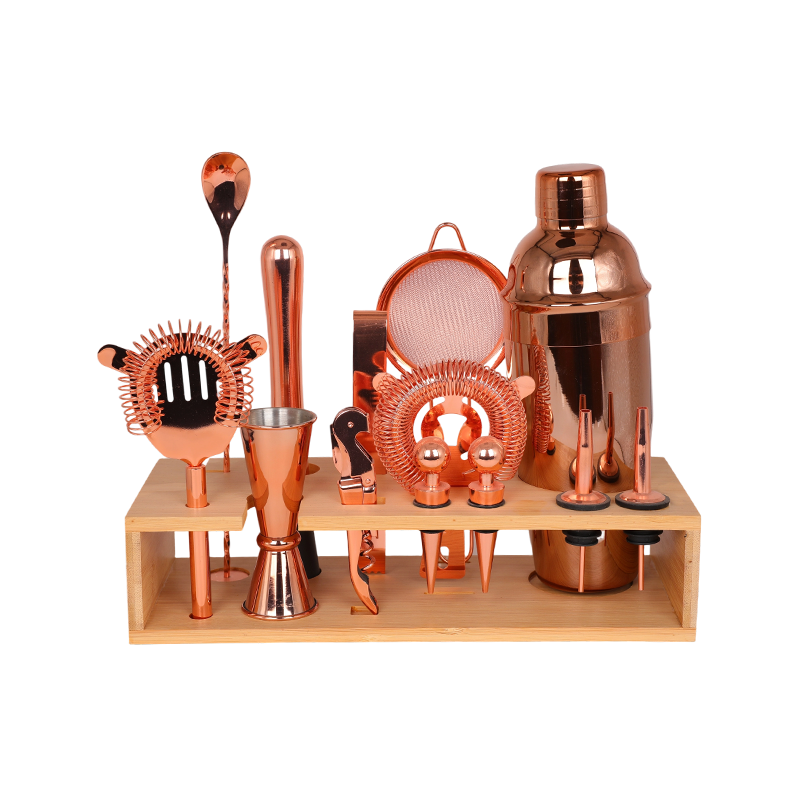
A well-prepared cocktail is often judged not by novelty, but by how closely it matches expectations each time it is served. For bars, restaurants, and professional settings, consistency is a practical requirement rather than a stylistic choice. A mixology cocktail kit supports this requirement by standardizing tools and preparation steps, while a professional cocktail kit brings together components designed to work together within established bartending methods. Instead of relying on personal habits or improvised equipment, bartenders can use structured tools to reproduce recipes with greater predictability across different shifts, staff members, and service volumes.
Understanding Drink Consistency in Practical Terms
Drink consistency refers to the ability to reproduce the same balance of flavor, aroma, texture, temperature, and appearance every time a recipe is prepared. Even small variations in measurement, dilution, or mixing technique can alter the final result. In high-volume or team-based environments, these variations become more noticeable when different bartenders prepare the same drink.
A comprehensive cocktail kit addresses this issue by reducing uncertainty at each step of preparation. When tools are designed for specific tasks and used consistently, the outcome becomes less dependent on individual interpretation and more aligned with the recipe itself.
Standardized Measurement and Portion Control
One of the significant contributors to consistency is accurate measurement. Recipes are written with specific ratios in mind, and deviations can shift the balance between sweetness, acidity, and alcohol content. A professional cocktail kit typically includes jiggers or measuring cups with defined volumes, allowing bartenders to follow recipes more closely.
Clear measurement markings support repeatability. When bartenders rely on the same measuring tools, portion sizes remain stable across different service periods. This consistency also supports cost control, as ingredient usage becomes more predictable and aligned with menu planning.
Shaker Design and Repeatable Mixing Results
Shaking is not only about combining ingredients; it also affects dilution and temperature. The type of shaker used, its capacity, and how securely it seals all influence the final drink. A mixology cocktail kit often includes both a Boston shaker and a three-stage shaker, giving bartenders options while maintaining standardized performance.
When shakers fit well and feel balanced, bartenders can rely on consistent shaking duration and motion. This familiarity reduces variation in dilution levels, helping drinks reach similar temperature and texture profiles each time they are prepared.
Controlled Stirring and Temperature Management
For cocktails that require stirring rather than shaking, consistency depends on controlled movement and timing. A properly designed bar spoon supports smooth, even stirring without unnecessary agitation. Its length and balance help bartenders maintain a steady rhythm, which influences how evenly ingredients integrate and how much dilution occurs.
Using the same stirring tools across a team helps establish shared expectations around technique. This alignment supports more uniform results, particularly for spirit-forward cocktails where subtle changes in dilution can noticeably affect taste.
Straining Methods and Texture Uniformity
Texture consistency is often overlooked, yet it plays a role in how a drink is perceived. Ice fragments, fruit pulp, or herb particles can change mouthfeel and appearance. A professional cocktail kit usually includes both standard strainers and fine mesh strainers, allowing bartenders to choose the appropriate filtration level for each recipe.
When the same straining tools are used repeatedly, bartenders can anticipate how much material will be retained or passed through. This predictability supports uniform texture across servings, especially for drinks that require a smooth finish.
Muddling Tools and Flavor Extraction Control
Many cocktails rely on fresh ingredients such as citrus, herbs, or berries. The way these ingredients are handled affects flavor intensity and balance. A muddler or tamper included in a mixology cocktail kit is designed to apply controlled pressure, helping release aromas and juices without excessive breakdown.
Consistency improves when bartenders use the same muddling tools and techniques. The size, weight, and surface texture of the muddler influence how ingredients respond, making it easier to repeat the same level of extraction across multiple drinks.
Juicing and Fresh Ingredient Preparation
Fresh juice introduces another variable in cocktail preparation. Differences in squeezing pressure or tool efficiency can cause uneven yields. A dedicated juicer included in a professional cocktail kit supports more uniform extraction by providing a defined method for handling citrus fruits.
When bartenders use the same juicing tool, the amount of juice extracted becomes more predictable. This helps maintain balance in recipes where citrus acidity plays a key role, reducing the need for adjustments during service.
Pour Spouts and Flow Predictability
While measuring tools remain essential, pour spouts contribute to consistency by supporting controlled liquid flow. Especially in busy settings, bartenders often combine measuring and free-pour techniques. A standardized pour spout helps align pour speed with counting methods, making volumes more predictable.
Using the same pour spouts across bottles supports a consistent pouring experience, reducing variation between different spirits or bartenders. This predictability complements measured pours rather than replacing them.
