
 English
  Español
More people are making cocktails at home than ever before. Lockdowns got some started. Social media kept others interested. Whatever the reason, the demand for home bar tools has grown significantly. A mixology cocktail kit factory produces the bundled sets that make it easy for beginners to get started. Instead of buying a shaker here, a jigger there, and a strainer somewhere else, customers buy one box with everything inside.
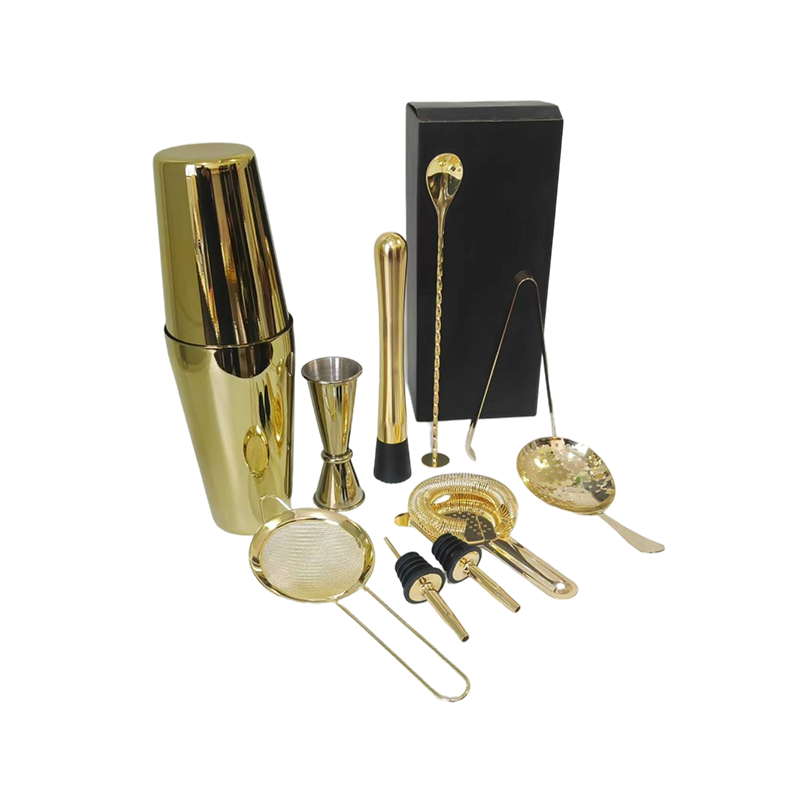
A mixology cocktail kit factory typically offers sets at different price points. A basic kit might include a shaker, jigger, and bottle opener. A standard set adds a strainer, mixing spoon, and muddler. A premium kit throws in a stand, recipe cards, two glasses, and maybe a small ice mold. The factory decides what goes where based on who they think is buying.
What Goes Into a Cocktail Kit
Walk through any mixology cocktail kit factory and you will see similar components across products. The shaker is the star. Cobbler shakers have a built-in strainer and cap — good for beginners. Boston shakers use two tins that fit together — preferred by people who have made a few drinks before. The factory chooses one or both styles depending on the kit.
Other pieces rolling off the line at a mixology cocktail kit factory include:
- Jiggers with different ounce markings on each side
- Hawthorne strainers with tight springs that fit over shaker tins
- Long spoons with twisted handles for stirring and layering
- Wooden or metal muddlers for crushing mint and fruit
Fine mesh strainers for double straining drinks with seeds or pulp
Quality varies across factories. A low-end mixology cocktail kit factory uses thin stainless steel that dents easily. A mid-range operation uses 18/8 or 18/10 steel with decent weight. A high-end factory uses thicker metal, seamless construction, and sometimes copper or brass accents. The customer feels the difference the first time they pick up the shaker.
Production and Assembly
Making a cocktail kit is not one production line. It is several lines feeding into one packing station. Shaker bodies are stamped or spun from stainless sheets. Spun shakers have no seams — they look cleaner and last longer. Stamped shakers have weld lines but cost less to produce. A mixology cocktail kit factory might use both methods across different product lines.
Jiggers and measuring cups get formed on similar presses. The markings inside matter. Some factories print the ounce lines. Printing wears off after a few months in the dishwasher. Better factories emboss or etch the markings. They cost more to make but the customer will notice the difference after washing the jigger ten times.
Muddlers and spoons come from separate areas. Wood muddlers get turned on lathes. Stainless steel ones get cast or machined. The mixology cocktail kit factory brings everything together at the packing station. Workers or machines place each tool into a foam or cardboard insert. The insert goes into a box. The box gets wrapped or sealed.
Packaging Makes the Sale
Here is something important. A mixology cocktail kit factory could make the outstanding tools in the world, but if the box looks cheap, nobody buys it as a gift. And cocktail kits are gifts. Birthday gifts. Wedding gifts. Holiday gifts. The box matters.
Manyfactories use rigid gift boxes with magnetic closures or sleeve designs. Inside, foam inserts hold each tool in its own cutout. The customer opens the box and sees everything arranged neatly. Some mixology cocktail kit factory products include a ribbon or a clear lid so the buyer can see the tools without opening the box.
Key packaging choices at a mixology cocktail kit factory:
- Box material — cardboard is cheap, rigid board looks premium
- Insert type — foam feels nice, plastic is cheaper, cardboard is eco-friendly
- Outer wrap — shrink wrap keeps dust out, no wrap saves plastic
- Branding — embossed logos cost more, printed labels cost less
Who Buys These Kits
A mixology cocktail kit factory sells to different customers depending on the price point. Department stores want mid-range kits priced between $30 and $50. Specialty kitchen stores carry $60 to $100 sets with better materials. Online sellers look for lightweight packaging to save on shipping. Corporate gift buyers order custom-branded kits in bulk, sometimes hundreds or thousands at a time.
Seasonal demand hits before the winter holidays. Wedding season brings another spike in late spring. A smart mixology cocktail kit factory builds inventory during slow months so they are ready when orders come in.
Buyers sourcing from a mixology cocktail kit factory should test samples before committing to a large order. Check the shaker seal. Feel the weight of the tools. Look at the box construction. These small details determine whether customers feel good about their purchase or return it.
A Growing Category in Housewares
The home cocktail market is not going away. A mixology cocktail kit factory serves this market by bundling the right tools into ready-to-sell sets. The factory decides which tools go together, how they are packaged, and what price point to hit. For retailers looking to get into the category, finding the right factory partner is the first step.