

 English
  Español
Busy bars, catering counters, and home beverage stations often depend on tools that support faster workflow and smoother drink preparation. A stainless steel bartender kit paired with a Boston shaker bar set is increasingly used in commercial and personal mixing environments because it helps reduce interruptions during cocktail assembly, ingredient mixing, and cleaning routines. Rather than focusing only on appearance, many users are now paying closer attention to handling comfort, material durability, and how equipment design affects preparation speed during repeated use.
Drink preparation time is influenced by several factors, including shaker sealing performance, tool accessibility, pouring control, and cleaning efficiency. Equipment that supports stable operation and organized workflow can help bartenders complete repetitive mixing tasks with fewer delays, especially during high-order periods in restaurants, bars, outdoor events, and mobile beverage services.
Why Drink Preparation Delays Happen in Bar Workstations
Cocktail preparation may appear straightforward from the customer side, but behind the counter the process involves multiple small movements that repeat continuously throughout a shift. Delays usually come from several operational issues rather than from mixing itself.
Poorly fitted shakers can slow down bartenders when separating the cups after shaking. Lightweight materials sometimes dent after repeated use, causing sealing inconsistency. In some workstations, tools are scattered across the counter, forcing staff to stop and search for jiggers, strainers, or muddlers between orders.
Temperature also affects workflow. Cold condensation on poorly balanced shakers may reduce grip stability, especially during extended service periods. When several cocktails are queued at once, even small interruptions can affect serving speed.
Another issue comes from cleaning procedures. Equipment with complex edges or coated interior surfaces may require longer washing time between shifts. In commercial kitchens and bars where tools are reused continuously, cleaning efficiency becomes part of operational timing.
Structural Features That Support Faster Mixing Operations
The design of the Boston shaker has remained widely used because of its simple two-piece structure. Compared with multi-part shakers that include threaded lids or integrated caps, the Boston-style setup reduces the number of assembly steps before shaking.
Many stainless steel shaker sets use one larger metal tin and one smaller companion cup. This construction helps users seal and separate the shaker with a quick tap instead of relying on screw connections. During fast-paced service, reducing these repetitive motions can help shorten order turnaround.
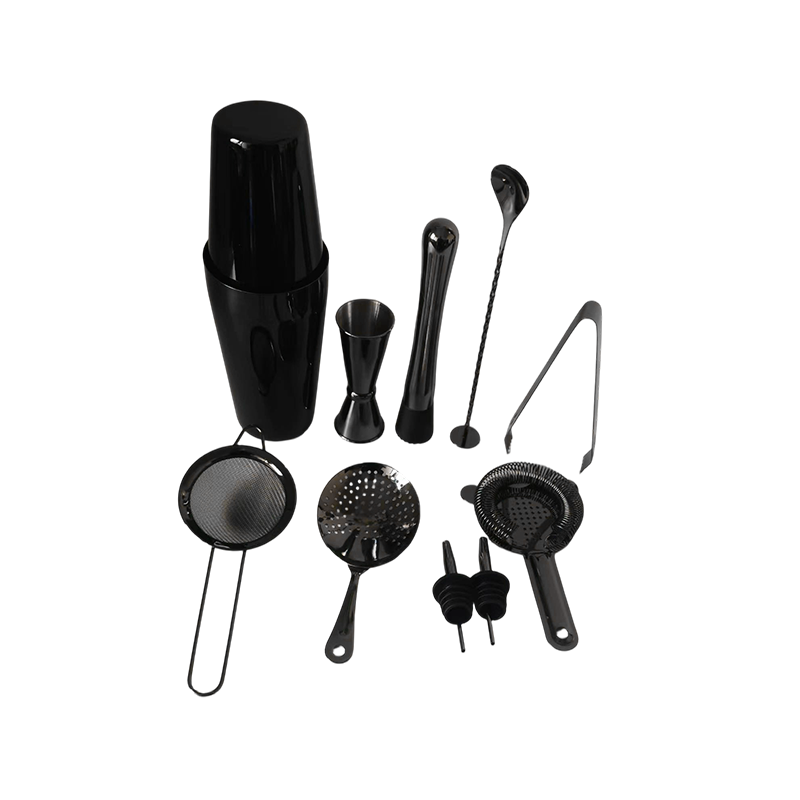
Several design adjustments commonly found in modern bartender kits also contribute to smoother workflow:
|
Component |
Functional Purpose |
Workflow Impact |
|
Stainless steel shaker tins |
Maintain structural shape during repeated shaking |
Reduces interruptions caused by deformation |
|
Weighted shaker base |
Improves balance while mixing |
Supports steadier movement |
|
Double jigger |
Measures two liquid volumes |
Reduces tool switching |
|
Hawthorne strainer |
Controls ice and ingredient flow |
Speeds up pouring |
|
Bar spoon with spiral handle |
Assists layered mixing |
Improves grip control |
|
Integrated storage stand |
Organizes accessories |
Shortens preparation movement |
The material itself also plays a role. Stainless steel surfaces are commonly chosen because they resist rust formation and are easier to rinse after exposure to citrus juice, syrup, alcohol, and crushed ingredients. Smooth inner walls can help reduce ingredient residue buildup, especially during repeated preparation cycles.
Some bartender kits now include etched measurement markings inside the jigger or shaker cup. These visual guides help reduce repeated measuring adjustments and allow faster ingredient portioning during routine drink preparation.
How Workflow Changes During High-Volume Beverage Service
Preparation efficiency becomes more noticeable during busy operating hours. A bartender preparing several cocktails simultaneously needs equipment that supports continuous movement without repeated corrections or tool replacement.
In restaurant bars, hotel lounges, and event beverage counters, the Boston shaker format is often preferred because it allows rapid switching between shaking, straining, and reassembly. Since the shaker separates into two open cups, bartenders can rinse and reset the tools quickly between orders.
Mobile bartending services also benefit from simplified equipment structures. Outdoor events and temporary beverage stations may have limited sink space or restricted preparation surfaces. Compact stainless steel kits are easier to transport and reorganize during setup and cleanup.
Several operational improvements are commonly reported in fast-service environments:
- Reduced sealing adjustment time before shaking
- Faster separation after chilled mixing
- Easier rinsing between cocktail batches
- Less counter clutter due to integrated tool organization
- Lower replacement frequency compared with coated materials
These workflow details may seem minor individually, but repeated hundreds of times during a shift, they influence overall service pacing.
Observed Use Cases Across Different Beverage Environments
The same shaker configuration may be used differently depending on service style. Cocktail lounges often focus on consistency across repeated drink recipes, while catering businesses may prioritize mobility and setup speed.
A small hospitality training center in Southeast Asia recently adjusted its classroom beverage stations by replacing mixed plastic-and-metal shaker systems with full stainless steel bartender kits. According to internal training feedback collected over several workshop sessions, students spent less time resealing shaker cups and more time practicing pouring techniques and recipe sequencing. Instructors also reported simpler cleanup routines at the end of each session because fewer components required separate washing.
In another example, a catering team operating at outdoor wedding events shifted from threaded cocktail shakers to Boston shaker bar set configurations after experiencing delays caused by lid sticking during cold-weather service. Staff noted that quicker shaker separation helped maintain drink output during peak serving periods.
While results vary depending on staff experience and workstation layout, these examples show how equipment structure can influence preparation rhythm in practical settings.
