
 English
 Español
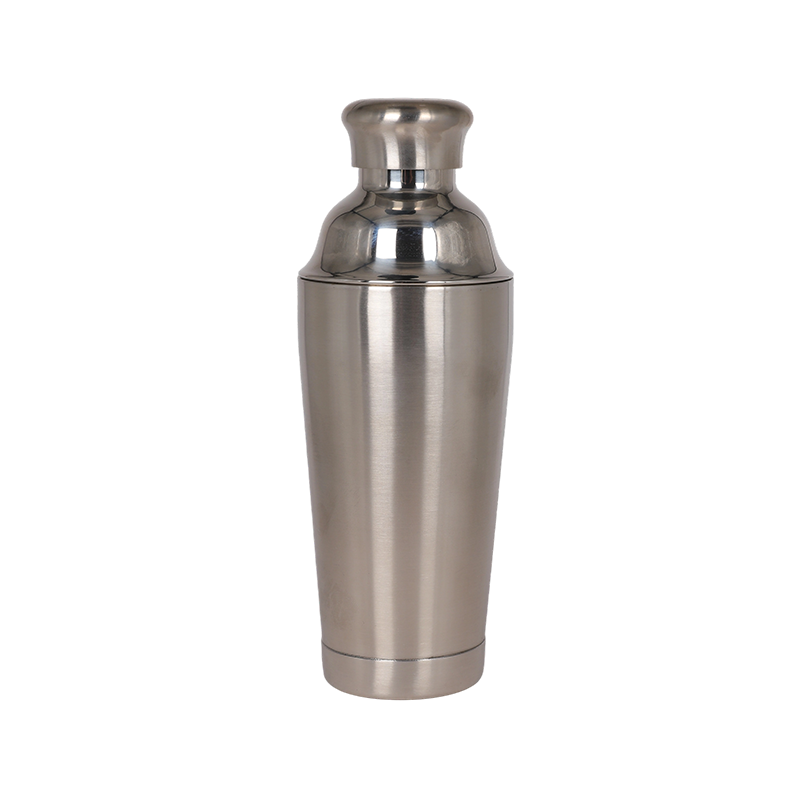
A commercial bar Boston shaker is two pieces: a large tin and a smaller tin or a mixing glass. The bartender fills the small one with the spirits, the citrus, and the ice, slams the large tin over it, shakes, and breaks the seal with a smack on the side. The three-piece cobbler shaker looks friendlier, but the working bar runs on the Boston because the bartender controls the seal instead of relying on the cap fit.
The Seal Is the Bartender's Skill, Not the Tool's
The Boston shaker seals by the friction between the two tins. The smaller tin wedges into the larger one at an angle, and the two tapers lock. A good seal holds through the shake and releases with a controlled hit. A bad seal leaks down the arm.
A commercial bar Boston shaker with the matched tapers seals fast and releases clean. The mismatched taper from the two suppliers leaks or locks, and either one slows the service during the rush.
The Tin Gauge and the Abuse
The commercial Boston shaker takes more abuse than the home one. It gets dropped, smacked on the bar edge, and run through the dishwasher at the end of the shift. The thin tin dents on the first drop, and the dent changes the seal.
A commercial bar Boston shaker with the 18/8 stainless and the heavier wall thickness survives the shift. The dented home-grade tin becomes the bar's spare and then the bin.
The Mixing Glass Alternative
Some bartenders prefer the Boston with the mixing glass instead of the second tin. The glass chills the drink without the metallic taste, and the weighted base sits steady on the bar mat. The risk is the breakage.
A commercial bar Boston shaker set that includes both the tin and the glass lets the bartender choose the format for the drink and the shift.
The Strainer and the Service
The Boston shaker needs the Hawthorne strainer, and the commercial version has to fit the tin and hold the spring tension through the hundreds of drinks. The strainer with the loose spring lets the pulp through, and the strainer with the stiff spring is hard to press.
What the factory has to deliver:
- Matched tapers for the clean seal and the release
- 18/8 stainless with the heavier wall
- Consistent capacity across the tins
- Compatible with the standard Hawthorne strainer
- Option for the tin-and-glass set
- Finish that hides the fingerprints and the scratches
The Craft Bar and the Hotel Bar
The craft bar uses the Boston for the volume and the control. The hotel bar uses it for the same reason. The home bar uses it because the professionals do.
Why the Boston Shaker Fails
The tins leak because the tapers were mismatched. The tin dents because the gauge was too thin. The seal locks because the metal contracted after the dishwasher. The strainer slips because the spring lost its tension. Each one is a factory decision or a maintenance decision, and the bar that replaces the cheap tin twice a year spends more than the one that bought the heavy tin once.